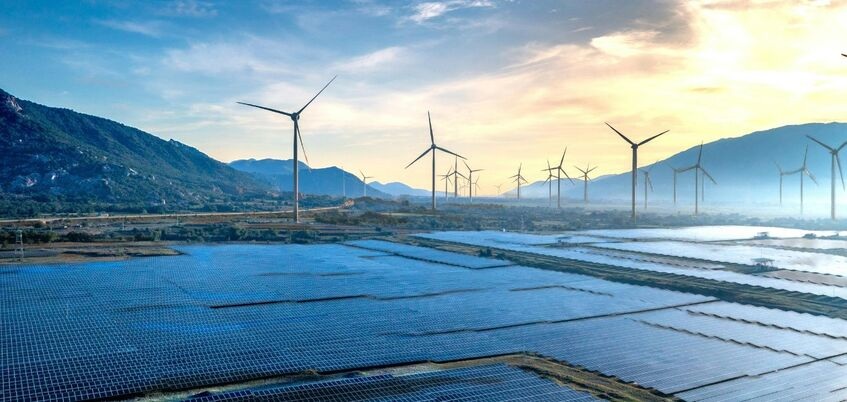
Spain is having a serious solar moment. In 2025 alone, the country added nearly 8,853 MW of new renewable energy capacity, with solar PV making up the vast majority at 7,896 MW. That puts Spain’s total installed solar PV capacity at over 48 GW, making it one of the most ambitious solar markets in Europe today.
But none of this happens by accident. Behind these numbers is a set of clear, structured policies that have made Spain one of the most attractive destinations for solar investment in the world. Let’s learn more about Spain solar policies in this blog.
Spain’s National Energy and Climate Plan, known as the PNIEC, sets the country’s solar target at 76 GW by 2030. Of that, 19 GW is earmarked specifically for distributed generation, meaning rooftop and small-scale solar that generates power closer to where it is actually used.
This isn’t just a number on paper. The pace of installations in 2025 shows the country is tracking toward that target seriously. Spain’s approach is somewhat similar to how Saudi Arabia has mapped out its own clean energy ambitions under Vision 2030, where long-term national targets are paired with structured investment frameworks to drive real market activity.
One of the more interesting moves Spain has made is investing not just in deploying solar, but in manufacturing the equipment that makes solar possible. The Ministry of Ecological Transition launched RENOVAL, a €355 million subsidy program funded through Spain’s recovery and resilience plan. According to PV Tech, the program targets production of solar PV modules, energy storage systems, wind components, and green hydrogen equipment.
The goal is straightforward: reduce Spain’s reliance on imported clean energy equipment while creating domestic jobs in the process.
This kind of upstream investment is something more countries are starting to replicate. When a government supports both the demand side (building projects) and the supply side (making components), the entire ecosystem becomes more resilient and cost-competitive over time.
For large-scale solar developers, policy certainty is everything. Spain’s REER auction scheme addresses this directly by offering long-term revenue contracts through a pay-as-bid system. Developers who win contracts under REER know what price they will receive for their electricity over an extended period, which makes project financing significantly more straightforward.
If you’re evaluating how different commercial structures affect solar project economics, it’s worth understanding how to choose the right solar commercial model before entering a new market. The difference between a well-structured auction contract and a poorly designed one can make or break the business case for a project. This kind of revenue visibility has been a major factor in pulling in the €17 billion renewables investment pipeline Spain has assembled.
For those looking at large-scale solar specifically, our piece on what lenders and owners need to know about solar parks covers how project finance considerations intersect with policy frameworks like REER.
Perhaps the single most consumer-friendly policy change Spain made in recent years was eliminating the so-called “sun tax.” This was a fee that effectively penalized homeowners and businesses for generating their own solar power. It made self-consumption economically unattractive and slowed rooftop solar adoption considerably.
With that tax gone, the results have been immediate. According to PV Magazine, Spain added 1,139 MW of new self-consumption solar capacity in 2025, bringing the country’s total solar self-consumption capacity to 9.3 GW. That is a substantial number and reflects genuine demand from households and businesses that now see real financial benefit in installing panels.
Rooftop solar is often underappreciated in the larger conversation about the energy transition, but it plays a meaningful role in grid resilience, energy access, and reducing peak demand. Spain’s self-consumption growth is a good reminder of how much a single policy barrier, when removed, can unlock. The model also connects closely to the broader shift toward decentralized solar energy, where businesses and households generate their own power rather than relying entirely on the central grid.
Spain’s policy approach works because it operates on multiple levels at the same time. You have long-term national targets that set direction, auction frameworks that de-risk private investment, manufacturing subsidies that build domestic capability, and consumer policies that make individual adoption sensible. Each piece reinforces the others.
For anyone working in solar development, procurement, or finance, Spain is a market worth watching closely. The combination of strong solar irradiation, policy clarity, and a well-established grid infrastructure makes it one of the most viable large-scale solar environments anywhere in Europe.